Your cart is empty
Tax included and shipping calculated at checkout

Drawer menu
Tax included and shipping calculated at checkout

Last Updated: September 18, 2026
Handcrafted goods worth the investment because they're made differently from the start. When you buy something handmade, you're paying for time, skill, and intention that factories simply don't offer. Mass production optimizes for volume and cost reduction. Artisanal creation optimizes for quality and uniqueness.
The price difference comes down to labor. A single artisan might spend hours on one piece while a factory produces hundreds in the same time. There's no way to compress that timeline without sacrificing the very qualities that make handcrafted goods worth buying in the first place.
Materials matter too. Small-batch producers often source better raw materials because they're not constrained by the need to find the cheapest supplier who can handle enormous orders. They can be selective, which costs more upfront but results in products that last longer and age better.
Handcrafted goods worth your attention because they deliver value that goes beyond the initial purchase. The value isn't just in what you hold in your hands, it's in what that object represents and how it performs over time.
Quality handcrafted items are built to last. A well-made piece doesn't just survive years of use, it often improves with age. The stitching holds, the finish deepens, and the character accumulates.
Mass-produced alternatives often fail within months or a few years. They're engineered with planned obsolescence in mind. You replace them, buy another, replace that one too. Over time, you spend far more replacing cheap items than you would have spent on a single well-made piece.
Longevity is the hidden math that makes handcrafted goods worth it. Calculate the cost-per-use over five years instead of the sticker price on day one, and the economics shift dramatically in favor of quality.
Every handcrafted item carries the knowledge of someone who spent years learning their trade. That expertise is embedded in every detail, how seams are finished, how materials are selected, how proportions are balanced.
Skilled artisans develop techniques that can't be replicated by machines or rushed workers. They understand their materials at a level that comes only from repetition and attention. When something goes wrong, they know how to fix it. When they see an opportunity to improve, they take it.
This level of skill creates products that function better and look better. It's the difference between a tool that works and a tool that feels right in your hand.
Handcrafted producers choose materials based on performance and durability. They can afford to be selective because they're not buying in volumes that require compromises.
Mass production demands standardization and cost efficiency. That often means substituting inferior materials, using thinner gauges, or applying cheaper finishes. These choices add up quickly when you're producing millions of units.
The difference shows up in how products age. Quality materials develop patina and character.
When you buy handcrafted goods, your money goes directly to the person who made them. There's no massive corporation extracting profit at every step. The artisan keeps most of what you pay, which means they can reinvest in better materials, better tools, and better working conditions.
Small-batch production creates less waste. A factory making millions of units produces defects by the thousands. Those get discarded. A handcrafter making dozens of pieces can afford to be more careful because the stakes are higher.
Handcrafted goods are rarely identical. Each piece carries the maker's hand and eye. That individuality means something. You're not one of millions with the same object. You have something that's genuinely yours.
Before you invest in handcrafted goods, verify that they're actually handmade. Ask the maker directly: What's your process? How long does each piece take? Can you show me your workspace?
The best artisans are transparent about how they work. They document their process, share photos of their workspace, explain their material choices. This transparency builds trust because it gives you access to the reality behind the product.
The real measure of whether handcrafted goods are worth it is cost-per-use over the item's actual lifespan. This calculation shifts the entire value proposition from emotional to economic, and it's where handmade items consistently outperform their mass-produced alternatives.
Cost-per-use is calculated as: (Purchase Price + Replacement Costs + Maintenance Costs) ÷ Total Uses Over Lifespan.
Most people compare only the sticker price. They don't account for:
Mass-Produced Leather Wallet:
Handcrafted Full-Grain Leather Wallet:
The handcrafted wallet costs 40-60 percent less per use, despite a 3-4x higher sticker price.
Mass-Produced Synthetic Tote:
Handcrafted Canvas Tote (natural fiber, hand-stitched):
The handcrafted tote costs 50-85 percent less per use.
Mass-Produced Ceramic Plates (set of 4):
Handcrafted Ceramic Plates (set of 4):
In this category, the costs are closer, but the handcrafted option still wins on durability and eliminates replacement waste.
Beyond the purchase price, each replacement carries additional costs:
Packaging and Shipping: Every replacement requires new packaging materials (plastic, cardboard, tissue, tape) and fuel for shipping. For a $25 item, packaging and shipping often cost $5-$10 in environmental and economic terms.
Handcrafted items can often be repaired. A handmade leather bag with a broken strap can be re-stitched by the maker or a skilled cobbler for $15-$30. A mass-produced bag with a broken strap is typically discarded because repair costs exceed replacement cost.
Handcrafted goods are how cultural knowledge survives. Traditional techniques, beadwork, weaving, dyeing, carving, only persist when people continue to practice them. When you buy handcrafted goods, you're voting for the continuation of these traditions.
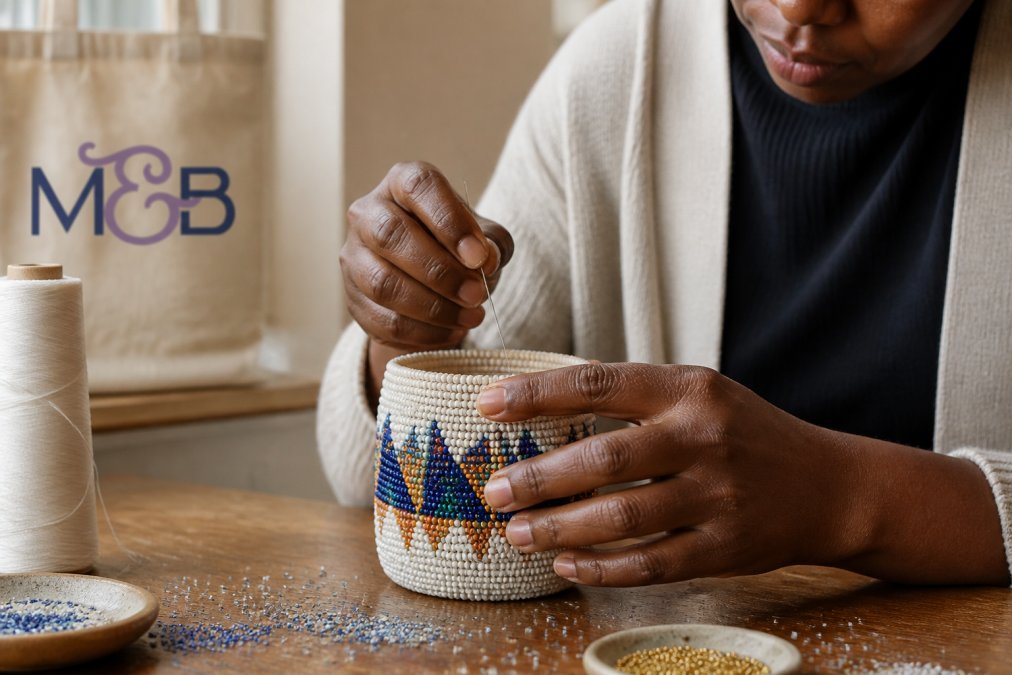
Handcrafted goods reflect the true cost of skilled labor, premium materials, and intentional time invested in each piece. Mass production spreads costs across thousands of units, while small-batch artisans invest hours in individual items. You're paying for craftsmanship, quality materials, and the maker's expertise, not factory overhead. A handmade beaded glass jar, for example, involves precision beadwork that cannot be replicated by machines without losing the authentic aesthetic and durability that makes the piece valuable.
Handcrafted products offer durability, uniqueness, and emotional value that mass-produced goods cannot match. Each piece is one-of-a-kind, supporting artisans and small businesses rather than corporate supply chains. Handmade items often use higher-quality materials and intentional construction, meaning they last longer and age beautifully. You also support sustainable, small-batch production that reduces waste and preserves cultural techniques. Beyond function, owning something handmade creates a connection to the maker's intent and artistry, adding intangible value to your everyday life.
Look for maker transparency: authentic artisans share their process, materials sourcing, and production methods. Check for natural variation, true handmade items show slight differences in color, pattern, or finish because no two pieces are identical. Ask about the maker's background and techniques. Reputable curators like Mercury & Bloom vet every artisan and provide details about where pieces come from and how they're made. Be wary of sellers who cannot explain their supply chain or show maker credentials. Authentic handcrafted goods come with a story and verifiable sourcing.
Yes, when sourced intentionally. Handcrafted production typically uses less energy, fewer synthetic materials, and minimal packaging compared to mass manufacturing. Small-batch makers often prioritize quality over quantity, meaning items last longer and reduce the need for replacements. Many artisans use traditional, low-impact techniques and locally sourced materials that reduce transportation emissions. However, sustainability depends on the maker's practices, ask about material sourcing, production methods, and packaging. Items designed for longevity and repair inherently reduce environmental impact through reduced waste and fewer replacements over a product's lifetime.


