Your cart is empty
Tax included and shipping calculated at checkout

Drawer menu
Tax included and shipping calculated at checkout

Last Updated: October 5, 2026
The fastest way to build personal aesthetic is to stop buying and start looking. A wardrobe audit means reviewing what you own to find patterns in what you actually wear, most people assume they need new clothes to feel stylish, but the opposite is true.
Here is how we would run an audit in one afternoon:
That last step matters. The box tells you whether you miss something. If you don't, let it go.
Mercury & Bloom was built around buying less and choosing better, pieces you reach for daily, not impulse buys that sit unworn.
Your daily routine is a better style guide than any trend report.
Look at three sources of evidence:
That third one is telling. Many people save things they admire but would never wear.
A common mistake is copying a look you love on someone else without asking whether it fits your life.
Write down five words that describe how you want to feel. Calm. Polished. Playful. Grounded. Warm.
Those words become your filter. Every purchase either supports them or doesn't.
A personal style mood board is a visual collection of images, colors, and textures that shows your taste in one place. The key word is use, most boards get built once and forgotten, so this version is a decision tool, not a decoration.
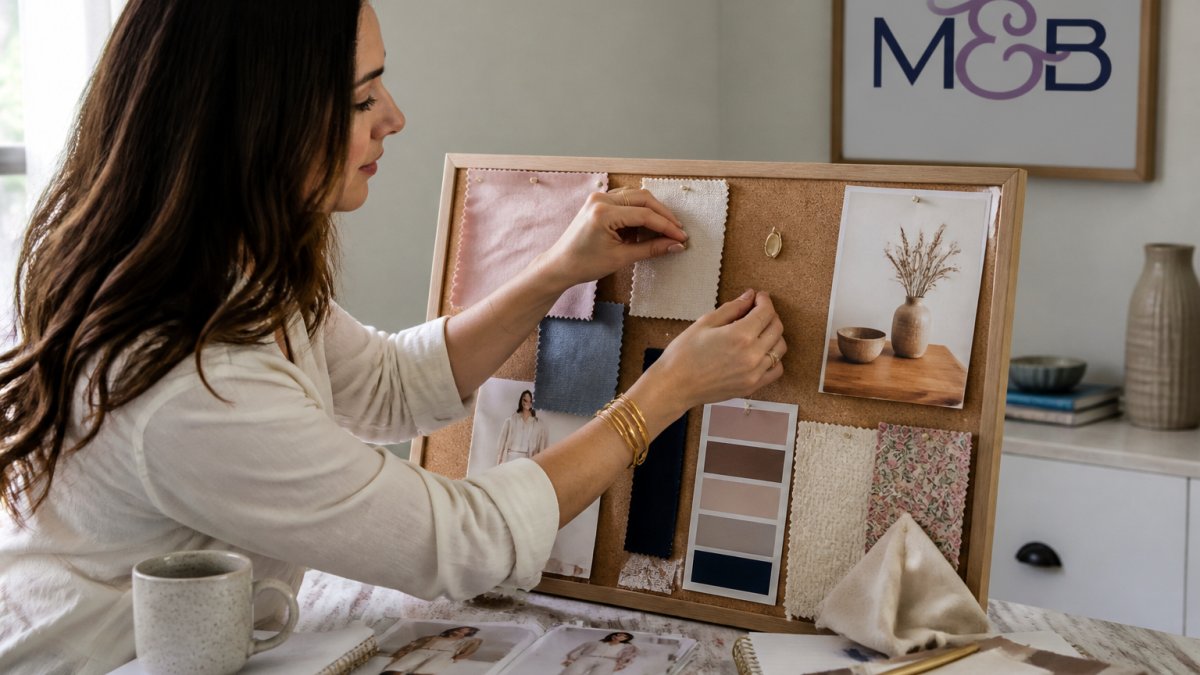
Most guides tell you to pin whatever you like, which produces a pretty collage and zero direction. Build in three layers instead:
If a pin doesn't fit one of the three layers, it doesn't go on the board. That single rule kills the trend-board problem before it starts.
A mood board only earns its keep if it changes what you buy. Add a running note beside the board with three columns:
That cap is the point: a three-item seasonal limit forces you to check the board before every purchase. If a piece doesn't match the anchor or palette layer, it waits, and most people find half their 'worth buying' list drops off within two weeks.
You don't need a subscription or a shopping habit to build a strong board. Free and low-cost sources:
A board built from these sources is more honest than one built from a retailer's feed, because nothing on it is trying to sell you something.
Review the board at the start of each season, not on a whim. Ask three questions:
Remove anything that fails all three, and add nothing new until you've removed something. A mood board is a living document; subtraction keeps it from drifting into a trend board.
Strong personal aesthetic ideas come from many places, but the goal is influence, not imitation.
Pull inspiration from:
Then translate, don't transplant. If you love a painter's palette, use those colors in your wardrobe, not the exact garments from a photo.
Most guides get this wrong: they tell you to "find your aesthetic" as if it's a fixed label.
A useful exercise: pick one influence and apply it in a small way, a single color, one texture, a recurring detail like a gold clip or a floral print.
The 3-3-3 rule in fashion builds outfits that look intentional and removes decision fatigue with a repeatable formula.
The rule works like this:
Stick to three colors and the outfit reads as cohesive; a fourth starts to feel busy.
| Element | What to Pick | Why It Works |
|---|---|---|
| Colors | 3 max, one dominant | Creates cohesion, avoids busy looks |
| Textures | 3 mixed | Adds depth without noise |
| Accessories | 3 total | Finishes the outfit, feels intentional |
This formula is a starting point, not a rulebook, once it feels natural, break it on purpose.
For a finishing touch, a small pair of Enamel Stud Earrings counts as one accessory and works with almost any palette.

A personal aesthetic isn't only about what you wear, it shows up in your home, accessories, and daily rituals. The same eye you use on an outfit can shape a room, a bag, or a morning routine, if you apply the same constraints: budget, function, and real life.
Take the anchor, palette, and detail layers from your mood board and apply them to one room at a time. Start with the room you spend the most waking hours in, not the one guests see.
You don't need to redecorate. Swapping two or three small items, a lampshade, a throw, a set of hooks, does more for cohesion than a full repaint, and the palette layer alone often fixes a room that felt 'off' without anyone being able to say why.
A cohesive look does not require new furniture or a new wardrobe. The highest-return, lowest-cost moves:
Accessories are where the two halves of your aesthetic meet. A tote, a mug, a candle, a bag charm, these small objects carry more weight than people expect because you touch and see them every day.

For a busy parent, function comes first. A Quilted Floral Tote Bag holds groceries, kids' items, or a laptop, and the hand-blocked print adds color without effort.

Accessories can also carry a little personality. A Puffy Bow Bag Charm clips onto a purse or backpack and adds a playful pop. Small details like this are often what make a look feel like yours.
An aesthetic that ignores your actual life won't survive contact with a Tuesday. Build around the constraints instead of fighting them:
Rituals turn a look into a habit, a slow morning coffee, a weekly closet tidy, a Sunday reset. These habits reinforce the aesthetic you're building and make it feel yours rather than borrowed.
A trend is a temporary shift in what's popular. An aesthetic is a lasting pattern in what you love.
Use this simple filter before buying into a trend:
The bow trend is a good example. Big bows are everywhere right now.
Over-labeling is a real trap. You don't need to call yourself "cottagecore" or "minimalist" to have a clear look.
Let your aesthetic stay a little open. That's what keeps it yours.
A personal aesthetic grows like a garden: slowly, with regular tending. It's not a project you finish but a practice you return to.
Set a simple rhythm:
A common mistake is treating style as a fixed destination. Life, bodies, and priorities change, your aesthetic should change with them.
Comfort and wearability aren't the enemy of style, they're part of it.
The Woven Hobo Bag is a good example of form meeting function.
A personal aesthetic is the consistent visual identity you express through clothing, accessories, home decor, and daily choices. It's not about following one trend or label; it's the recurring colors, textures, silhouettes, and details that feel like you. Your personal aesthetic shows up in what you reach for repeatedly, how you combine pieces, and the small rituals that make your space and style feel intentional. It can evolve, but it always reflects your preferences, lifestyle, and comfort needs rather than someone else's feed.
Start with a wardrobe audit. Pull everything out and sort into three piles: pieces you wear often, pieces you love but rarely wear, and pieces that don't fit your current life. Look for patterns in the first pile: colors, fabrics, and silhouettes that repeat. Those repeats are your personal aesthetic clues. Build outfit formulas around them, then fill gaps with intention. You don't need to buy a whole new wardrobe; you need to see what's already working and make it easier to wear.
The 3-3-3 rule is a simple outfit formula that helps you build a cohesive look without overthinking. It suggests choosing three colors, three textures or fabrics, and three accessories or details to repeat across an outfit. For example: a neutral base, one accent color, and a metallic; cotton, leather, and enamel; then earrings, a bag charm, and a belt. The repetition creates visual cohesion, making the outfit feel intentional rather than random. It's a flexible framework, not a strict law.
Intentional dressing comes down to a few repeatable habits. First, plan outfits around a single focal point, like a statement bag or a pair of enamel stud earrings, then let everything else support it. Second, use a consistent color palette so pieces mix easily. Third, pay attention to proportion: balance a loose top with a fitted bottom, or vice versa. Finally, repeat signature details, such as a gold clip or a specific silhouette, across outfits. These small choices signal that you got dressed on purpose, not in a rush.
Building a personal aesthetic takes patience, not a bigger budget. The challenge is trusting your own eye when trends pull you elsewhere. At Mercury & Bloom, we make that easier with handcrafted pieces chosen for individuality, quality, and everyday function. From minimalist enamel stud earrings to artisan-made totes, each item is picked to support the style you're already growing. Get started with Mercury & Bloom and build a look that feels like you.


