Your cart is empty
Tax included and shipping calculated at checkout

Drawer menu
Tax included and shipping calculated at checkout

Last Updated: September 27, 2026
Sustainable home decor is the practice of furnishing and styling a home with pieces made from responsibly sourced materials, produced through ethical manufacturing, and designed to last rather than be replaced each season. It is not a single aesthetic, and it is not a price bracket. It is a set of decisions about where a piece came from, how it was made, and where it will go when you are finished with it.
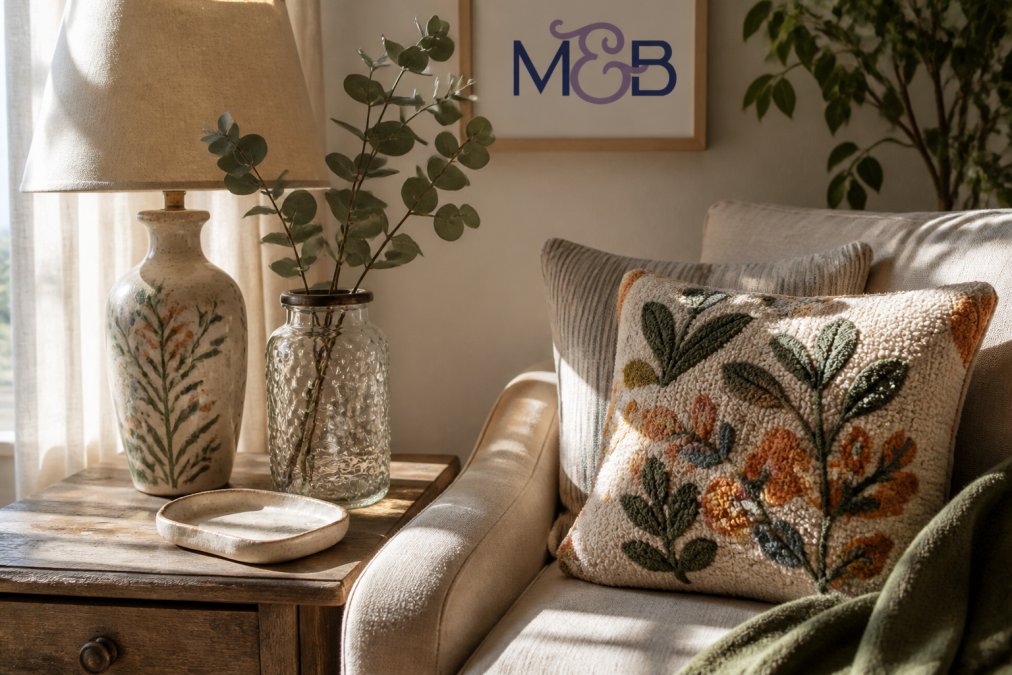
At Mercury & Bloom, we think about this constantly, because our shelves are filled with handcrafted pieces: beaded glass jars, hand-painted bottle lamps, wool hooked pillows. A sustainable home decor shopping guide starts with one uncomfortable truth: most decor sold today is designed for a trend cycle, not a lifetime.

The fastest way to evaluate any decor piece is to read the material list before the price tag. Natural fibers, recycled materials, and upcycled components are the three categories that consistently hold up to scrutiny. Here is how to tell them apart in practice.
Natural fibers come from plants or animals and can typically biodegrade at the end of their life. The ones worth knowing by name:
Recycled metal and recycled glass reduce demand for newly mined or newly fired raw materials, and both are endlessly recyclable without losing quality. Upcycled pieces go a step further: they take an existing object and give it a second function.
Greenwashing is the practice of making a product sound environmentally responsible through vague or unverifiable language. It is the single biggest obstacle in ethical home decor shopping, because the words are cheap and the claims are rarely checked. If a label says "eco-friendly" with no certification, no material list, and no origin, treat it as decoration on the packaging, not a fact about the product.
Watch for these signals:
Certifications are how you separate a real claim from a marketing line. The Federal Trade Commission's Green Guides set the standard for how environmental claims may be advertised, and they exist precisely because vague green language misleads shoppers. Look for third-party marks that verify a specific attribute:
Artisanal home decor delivers two things mass production cannot: durability and character. Handcrafted pieces are typically made in small batches by people who work with the material directly, which means tighter quality control and fewer shortcuts. In practice, that translates to furniture and accessories that survive moves, toddlers, and trend cycles.
Use this checklist before you check out. It takes about two minutes and prevents most regrets.
The circular economy is a system where materials stay in use for as long as possible through reuse, repair, and recycling instead of a straight line from shelf to landfill (the EPA). Most decor guides stop at the purchase. The real test of a sustainable piece is what happens after you are done with it.
| Material | Best End-of-Life Path | Avoid |
|---|---|---|
| Solid wood | Refinish, donate, or repurpose | Curb without checking |
| Wool and natural fibers | Compost if untreated, or donate | Landfill |
| Recycled glass | Recycle indefinitely | Breakage in trash |
| Recycled metal | Scrap or recycle | Mixed-material bins |
| Ceramic | Donate or use as planters | Landfill |
| Upcycled bottles | Refill, repurpose, or recycle | Discard |
Sustainable home decor shopping does not require a big budget. It requires a different order of operations. The cheapest sustainable piece is usually the one you already own, restyled or repaired.
Start with what you have:
Sustainable home decor covers pieces made from responsibly sourced or recycled materials, produced through ethical manufacturing, and built to last rather than be replaced each season. It also considers the full lifecycle: where the raw materials came from, how far the item shipped, whether it is non-toxic, and what happens when you no longer want it. A hand-painted bottle lamp or a beaded glass jar made by artisans fits this model because it is durable, often upcycled, and keeps materials in use longer than mass-produced alternatives.
Look for specifics rather than slogans. A brand that names its materials (organic cotton, hemp, linen, solid wood, recycled glass), explains where items are made, and gives care instructions is showing its work. Vague phrases like 'eco-friendly' without a certification or supply chain detail are a warning sign. Check whether the brand mentions fair trade, managed forests, or ethical manufacturing in plain language, and whether it tells you how to repair, repurpose, or recycle a piece at the end of its life.
Start with natural fibers like organic cotton, hemp, and linen, which are biodegradable and use fewer synthetic inputs. Solid wood from managed forests beats particleboard for durability and indoor air quality. Recycled metal and recycled glass reduce demand for new raw materials. Handcrafted items made from upcycled materials, such as a repurposed ceramic bottle turned into an olive oil dispenser, keep existing resources in circulation. Avoid pieces with heavy chemical finishes or materials you cannot identify.
Often, yes, for three reasons. Handcrafted pieces are usually made in smaller batches, which reduces waste from overproduction. They tend to be more durable because artisans build them to last, so you replace them less often. And buying directly from makers supports ethical manufacturing and fair trade practices rather than factory-scale output. The benefits of artisanal home decor also include one-of-a-kind character, which means you keep a piece longer instead of swapping it out when trends change.
Begin with what you already own. Repair, reupholster, or restyle existing pieces before buying anything new. When you do buy, follow an ethical home decor shopping checklist: confirm the materials, ask where it was made, check for certifications, and consider the carbon footprint of shipping. Add one or two handcrafted statement pieces, like a beaded glass jar or a hand-painted lamp, that anchor the room and reduce the urge to keep buying filler decor.
Ethically sourced accessories support fair wages and safer working conditions for the people who make them. They also tend to use non-toxic finishes and responsibly sourced materials, which supports better indoor air quality. Because these pieces are often handcrafted and durable, they last longer and reduce waste over time. Many are also upcycled or made from renewable resources, so each purchase keeps materials in the circular economy instead of sending them to a landfill.


