Your cart is empty
Tax included and shipping calculated at checkout

Drawer menu
Tax included and shipping calculated at checkout

Last Updated: October 18, 2026
True sustainability in home decor goes beyond marketing language. It means transparency about where products come from, how they're made, and what happens when they wear out. At Mercury & Bloom, we've built our curation around this principle: every piece we select meets high standards for quality, beauty, and functionality.
Sustainable home decor brands share common traits. They prioritize natural materials like organic cotton, linen, jute, and reclaimed wood. They invest in artisan-made goods produced by real craftspeople, not mass-manufactured in anonymous factories. They commit to fair trade practices and transparent supply chains. They design for durability, not disposability, so pieces last years rather than seasons.
The difference between greenwashing and genuine sustainability comes down to verifiable claims. A brand that shares details about its makers, material sourcing, and production methods earns trust. One that vaguely promises "eco-friendly" without specifics is avoiding scrutiny. When shopping for sustainable home decor, look for brands willing to answer the hard questions: Who made this? Where did the materials come from? What certifications back up the claims?
This matters because your home reflects your values. Every piece you bring in either supports responsible production or fuels the fast-furniture cycle. The best sustainable home decor brands understand this responsibility and build their entire operation around it.
Finding truly eco-friendly home decor brands requires moving beyond price and aesthetics to ask deeper questions about production, materials, and longevity. Below, we've identified standout options that demonstrate genuine commitment to sustainable practices and artisan craftsmanship.
These aren't mass-produced novelties. Each jar and candle is meticulously handcrafted by talented Mexican artisans, with intricate beadwork that transforms simple glass vessels into statement pieces. The craftsmanship is the point, no two pieces are identical, which means your home decor becomes truly one-of-a-kind.
What makes this sustainable: Each jar is designed for reuse, after the candle burns down, you have a beautiful storage vessel or decorative object. The artisan production model supports skilled workers directly.
The durability factor matters here. Many customers repurpose them as candy jars, pencil holders, or bathroom storage. That longevity is the hallmark of sustainable design.
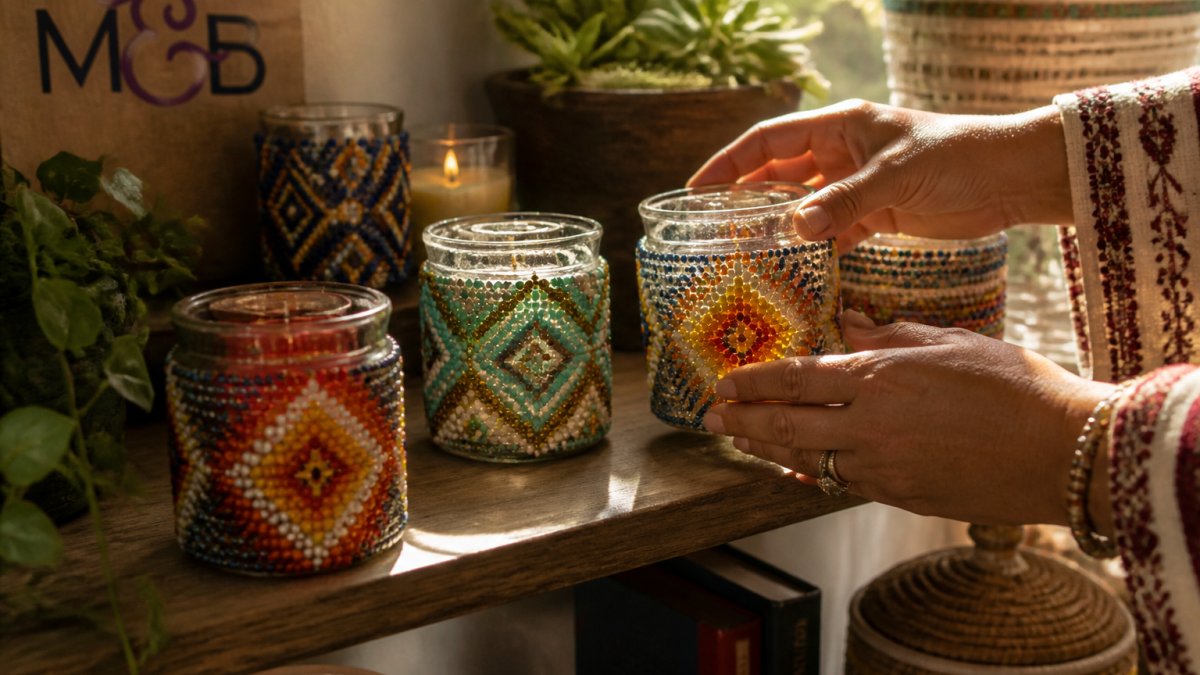
Best for: Anyone seeking statement-making home decor that doubles as functional storage. Perfect for gift-giving or adding warmth to living rooms, bedrooms, or bathrooms.
Price: $40.00 per piece
What sets it apart: The transparency. You know exactly where these come from and who made them. No supply-chain mystery. The soy candle option means you're not filling your home with synthetic fragrance and paraffin smoke. And the reusability extends the product's life far beyond the initial candle burn.
Shop: Handmade Beaded Glass Jars and Candles

Quilted cotton tote bags from Indian artisans represent a different angle on sustainable home decor. These aren't just shopping bags, they're functional art pieces that bring color, pattern, and personality to any space. Hand block-printed designs, machine quilting, and durable cotton construction mean they actually improve with age.

What makes this sustainable: The quilting adds structure and longevity. Indian artisans are paid fairly for their skilled labor, supporting traditional craft techniques that might otherwise disappear.
These bags work as home decor in ways most people don't immediately recognize. Hang them on hooks in entryways for functional storage. Drape them over chair backs. Use them to organize closets or display on shelves. The floral prints and hand-printed patterns add visual interest without requiring wall space.
Best for: People who want sustainable home goods that serve multiple purposes. Perfect for those who value visible craftsmanship and unique, non-mass-produced items.
Price options: $35.99-$55.00 depending on style and material
What sets it apart: The variety. Choose from floral prints in multiple colorways (purple, pink/pale blue, orange/pink, salmon/sage, teal/white, royal blue/white) or tiger prints in bold colors. Machine quilting adds durability. The inside pocket provides hidden storage. These bags are washable on delicate cycles, extending their usable life even further.
Shop options:
Not all materials are created equal when it comes to sustainability. Some break down quickly. Others off-gas harmful chemicals. The best sustainable home decor relies on materials chosen specifically for longevity, low environmental impact, and responsible sourcing.

Natural materials like organic cotton, linen, jute, and seagrass are renewable and biodegradable. Wood, especially reclaimed wood, carries no manufacturing footprint and improves with age. Clay and stone are earth-sourced and essentially permanent, they don't degrade or require replacement.
What matters most is durability. A piece made from high-quality cotton that lasts 10 years beats a cheap synthetic item that falls apart in two. The environmental cost of producing something new almost always exceeds the cost of using something longer.
Recycled and upcycled materials deserve mention here too. Reclaimed wood, recycled glass, and repurposed textiles give materials a second life instead of sending them to landfills. When a brand uses these materials intentionally, it's not just marketing, it's a concrete commitment to waste reduction.
The aesthetic benefit is real as well. Natural textures, earthy tones, and the visible imperfections of handmade items create warmth that mass-produced decor can't replicate. Sustainable materials often look better and feel better because they're chosen for quality, not cost-cutting.
Handmade home decor isn't a luxury, it's a practical investment in quality that lasts. When someone spends hours creating a single piece, they're not cutting corners or using cheap materials. They're building something meant to be kept.
Artisan-made goods carry stories. The beadwork on a Mexican glass jar represents techniques passed down through generations. Hand block-printed Indian cotton reflects the skill of craftspeople. These aren't anonymous products stamped out by machines. They're made by real people whose reputation depends on quality.
This matters for sustainability in a way that goes beyond materials. Artisan production supports local economies and preserves traditional skills. It creates employment that can't be outsourced. It builds communities around craft rather than around consumption. When you buy handmade, you're voting for a different economic model.
The practical advantage is longevity. Handmade items are built to last because the maker stands behind their work. There's no planned obsolescence, no cost-cutting to hit a price point.
The myth that sustainable home decor must be expensive keeps many people locked into fast-furniture cycles. It doesn't have to be this way. Affordability and sustainability can coexist when you prioritize durability.
Mercury & Bloom's approach proves this. The quilted tote bags start at $35.99 for the blue tiger print, a reasonable price for a hand-printed, machine-quilted cotton bag made by Indian artisans. The handmade beaded glass jars are $40.00 each. These aren't bargain-basement prices, but they're not luxury pricing either. They're fair prices for items that will last years.
Here's the math: Sustainable doesn't mean expensive, it means thinking in terms of longevity.
The key is understanding what you're actually paying for. You're paying for craftsmanship. You're paying for materials chosen for durability. You're paying for fair wages to artisans. These are legitimate costs that reflect real value.
Shopping sustainably also means buying less but buying better. Instead of filling your home with ten cheap decorative pieces, you buy two or three quality items that you actually love. This reduces waste, saves money over time, and creates a home that feels intentional rather than cluttered.
| Item | Price | Material | Artisan-Made | Reusable/Durable |
|---|---|---|---|---|
| Beaded Glass Jar & Candle | $40.00 | Glass, soy wax | Mexican artisans | Reusable jar |
| Quilted Tote Bag | $35.99-$45.00 | Organic cotton | Indian artisans | 5-10+ years |
| Velvet Tiger Tote | $55.00 | Velvet cotton | Indian artisans | 5-10+ years |
Sustainable shopping requires asking questions. A brand serious about sustainability will have answers.
Ask about materials. Where does the cotton come from? Is it organic? Is the wood reclaimed or responsibly harvested? Are dyes non-toxic? A brand that can answer these questions is being transparent.
Ask about the makers. Who actually produces this? Where? What are their working conditions? Are they paid fairly? Real artisan brands can name their makers or at least describe their production communities. This isn't privacy, it's accountability.
Ask about longevity. How long is this designed to last? What happens when it wears out? Can it be repaired? Is there a take-back program? Sustainable design means thinking beyond the sale.
Check for certifications. Look for Fair Trade, organic certifications, or other verified standards. These aren't perfect, but they're third-party verification that someone's checking claims. Unverified "eco-friendly" claims are marketing, not proof.
Verify the supply chain. According to the FTC's Guides for the Use of Environmental Marketing Claims, companies cannot make vague environmental claims without substantiation.
Look for consistency. A truly sustainable brand doesn't just have one eco-friendly line, it's built into everything they do. The materials, the pricing, the business model, the communication. Greenwashing is usually inconsistent. Real commitment shows up everywhere.
Mercury & Bloom's curation model reflects these principles. Every piece is selected with intention. The brand doesn't just sell products, it verifies that artisans are real, materials are quality, and craftsmanship is genuine. This is what transparency looks like.
Research from the Harvard Business School's studies on sustainable consumer behavior shows that consumers increasingly value transparency and authenticity. Brands that can prove their claims build lasting customer loyalty. Those that can't eventually lose trust.
Choosing sustainable home decor brands 2026 means moving past marketing language to verify actual practices. Look for handmade, artisan-produced pieces made from durable natural materials. Expect to pay fair prices that reflect real craftsmanship.
The best sustainable home decor brands prioritize ethical sourcing, natural materials, and transparent production practices. Mercury & Bloom curates handmade pieces from artisans worldwide, including authentic Mexican beaded candles ($40) and Indian quilted tote bags ($35.99-$55). Look for brands that disclose where items are made, support fair trade practices, and use materials like organic cotton, natural fibers, and recycled components. Handcrafted pieces tend to offer greater longevity than mass-produced alternatives, making them a smarter investment for conscious consumers.
Verify sustainability through several markers: transparent supply-chain information (where items are made, who makes them), certifications or partnerships with fair-trade organizations, use of renewable or recycled materials, and honest communication about environmental impact. Handmade goods from named artisans typically signal genuine craftsmanship. Ask brands directly about their sourcing practices, material origins, and end-of-life options. Mercury & Bloom's pieces, for example, are handcrafted by Mexican and Indian artisans and made from natural materials like cotton and soy candles. Beware of vague claims like 'eco-friendly' without specific material or sourcing details.
Natural, renewable materials tend to be the most durable: organic cotton, linen, jute, seagrass, reclaimed wood, stone, and clay. Handmade quilted cotton bags, for instance, withstand years of use when cared for properly. Wood and stone age gracefully and can be repaired or refinished rather than discarded. Avoid synthetic blends and mass-produced items designed for short-term use. Investing in timeless, well-made pieces, like artisan-crafted tote bags or beaded glass vessels, reduces waste and provides lasting value, making sustainable choices economically sensible over time.
Handmade home decor is typically more sustainable because it emphasizes durability, ethical labor practices, and reduced waste. Artisan pieces are crafted with intention and higher-quality materials, resulting in longer product lifespans. Handmade items also support fair-trade practices and local economies, ensuring makers are compensated fairly. Mass production often relies on cheap labor, synthetic materials, and planned obsolescence. Handcrafted goods like Mercury & Bloom's quilted tote bags and beaded candles are designed to be cherished and maintained, not replaced seasonally. While handmade items may cost more upfront, their longevity and ethical production make them a smarter choice for environmentally conscious consumers.


