Your cart is empty
Tax included and shipping calculated at checkout

Drawer menu
Tax included and shipping calculated at checkout

Last Updated: October 7, 2026
Sustainable fashion accessories for women are pieces designed to minimize environmental harm and support fair labor across their entire lifespan, from raw material through disposal, and that definition applies to every sustainable fashion accessories purchase you make.
The market has noticed. The global sustainable fashion market continues to expand as more shoppers ask where their accessories actually come from, and the FTC's Green Guides set the standard for how brands may legally describe environmental claims.
Most sustainability checklists stop at materials. That's a mistake.
Eco-friendly fashion accessories use materials chosen for lower environmental impact and longer product lifespan. But no material wins across every category. The right choice depends on the accessory type, how often you'll wear it, and whether you're willing to maintain it. A beaded pouch and a structured handbag have different demands, and matching material to function prevents premature replacement.
| Accessory Type | Strongest Material Choice | Why It Works | Trade-Off to Know |
|---|---|---|---|
| Jewelry | Recycled metals, reclaimed stones | Durable, repairable, retains value | Recycled gold and silver cost more upfront; stones may have limited traceability |
| Handbags | Woven vegan leather, reclaimed fabric | Holds shape, resists daily wear | Vegan leather can crack at stress points; reclaimed fabric needs gentle cleaning |
| Coin pouches | Hand-beaded cotton, upcycled textiles | Small-batch, repairable beadwork | Beadwork can loosen with heavy use; cotton stains without prompt spot-cleaning |
| Belts and straps | Vegetable-tanned or recycled leather | Ages well, replaceable hardware | Vegetable-tanned leather requires conditioning; recycled leather varies in quality |
Recycled metals, Recycled gold and silver carry the same purity as newly mined metal, and they can be re-refined indefinitely.
Reclaimed and upcycled textiles, These materials divert waste from landfill, but their durability depends entirely on the base fabric.
Vegetable-tanned leather, Tanned with plant extracts rather than chromium, this leather ages into a patina and can be conditioned for decades.
Hand-beaded and hand-embroidered fabrics, These are among the most repairable accessory materials because individual beads or threads can be replaced.
Ask three questions before you buy: How often will I use this? Can it be repaired if it wears out? What happens to it when I'm done with it? A material that scores well on all three, recycled metal jewelry, vegetable-tanned leather belts, hand-beaded pouches, is almost always the better long-term choice, even at a higher upfront price.
Sustainable jewelry prioritizes recycled or responsibly sourced metals and traceable stones over newly mined materials. Look for recycled gold and silver, which carry the same quality as mined metal with a fraction of the extraction impact.
Handmade and artisan-made pieces often make verification easier. A small-batch maker can usually name their metal supplier; a mass-market brand often cannot. That transparency gap is where greenwashing hides, and it's why we favor makers who answer sourcing questions directly.
Sustainable handbags balance material choice with construction quality and versatility. Vegan leather, woven designs, and hand-beaded fabrics each serve different needs, and the best choice depends on how you'll use the bag daily.
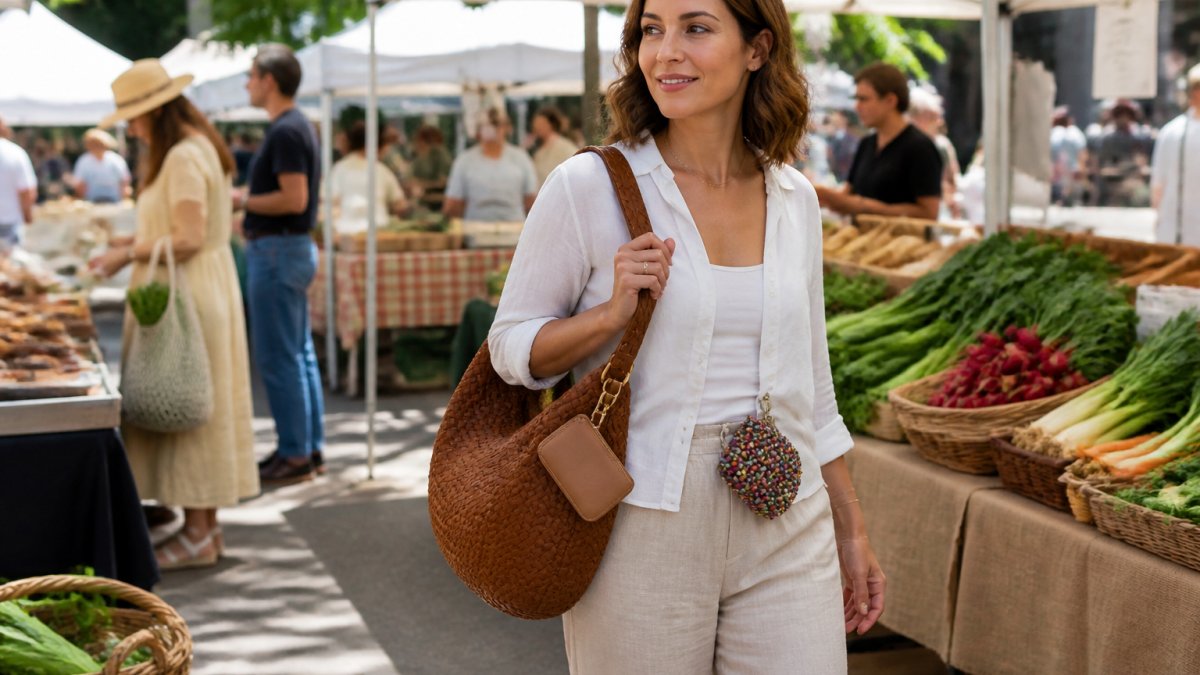
Consider the Woven Shoulder Strap Hobo Bag, built from vegan leather with a woven design, dual shoulder straps, gold hardware, and a removable zip pouch.
Smaller pieces matter too. A handmade beaded coin purse at $17.00 keeps loose change and small essentials organized inside a larger tote, and its 100% cotton construction and pom-pom zipper make it a gift that lasts. For Mahjong lovers, the Beaded Mahjong Tote pairs hand-beaded craftsmanship with a satin lining at $209.00.


Handmade fashion accessories come from identifiable makers rather than anonymous factory lines, and that distinction drives both quality and accountability. When you can trace a piece to a craftsperson, fair labor and responsible production become verifiable rather than assumed.
The vetting question we hear most is simple: how do you know a piece is genuinely handcrafted? Ask for process photos, maker names, or production details. A real artisan supply chain can show its work. A dropshipper cannot.
Mercury & Bloom curates handcrafted pieces rather than operating as an open marketplace, which means each item is selected with intention. The Mahjong Beaded and Sequined Headband at $35.00 is a good example: velvet-lined, double-sided, and handmade with slight variations that signal real craftsmanship rather than mass production.
Verifying a sustainability claim means asking for evidence a brand can actually provide: certifications, supply chain details, and specifics about materials. The U.S. EPA's sustainable materials guidance offers a useful framework for thinking about material impact and waste reduction. If a brand can't answer basic sourcing questions, treat the claim as marketing.
Watch for these warning signs:
The FTC's guidance on environmental marketing claims makes clear that broad, unqualified environmental claims can be legally deceptive. That's your use as a shopper: ask for specifics, and hold brands to them.
Cost per wear is the real price of an accessory: total cost divided by the number of times you wear it. A $209.00 handbag worn 200 times costs about $1.05 per wear. A $30 bag worn five times before it falls apart costs $6 per wear. The expensive piece is often the cheaper one.
Use this formula: purchase price ÷ estimated wears = cost per wear. To estimate wears, think about how often you'd realistically use the piece in a year, then multiply by the years you expect it to last with proper care.
| Accessory | Price | Estimated Wears | Cost Per Wear |
|---|---|---|---|
| Woven Shoulder Strap Hobo Bag | $209.00 | 200 | $1.05 |
| You Are Amazing Beaded Coin Purse | $17.00 | 150 | $0.11 |
| Mahjong Beaded and Sequined Headband | $35.00 | 80 | $0.44 |
| Fast-fashion bag | $30.00 | 5 | $6.00 |
A piece that costs more upfront but lasts years almost always wins. The catch is that cost per wear only holds if you actually care for the item.
Most accessory failures are repairable. A loose strap can be re-stitched, a clasp replaced, a bead restrung, a zipper fixed. Local shoe repair and leather workers often handle bags and belts for a fraction of replacement cost. For beaded pieces, a craft or bead shop can often match and replace missing beads.
Quality accessories hold value. Recycled metal jewelry, vegetable-tanned leather, and handcrafted bags can be resold through consignment shops, online resale platforms, or directly to another owner. Fast-fashion accessories rarely resell because they don't last long enough to find a second buyer.
When resale isn't possible:
| End-of-Life Option | Best For | Why It Matters |
|---|---|---|
| Resale | Quality, wearable pieces | Keeps items in use and recoups value |
| Donation | Gently used accessories | Extends life and supports community |
| Metal recycling | Jewelry, hardware | Recovers valuable materials |
| Textile repurposing | Worn cotton, fabric | Diverts waste from landfill |
Cost per wear, care, repair, and resale are not separate steps, they're one continuous practice. A piece you maintain and eventually resell has a far lower environmental cost than one you replace every season, regardless of how it was made. That's the practical version of slow fashion: buy less, care well, and keep pieces in circulation as long as possible.
Building a conscious accessory wardrobe takes patience, not perfection. Start with versatile, well-made pieces you'll actually wear, verify claims before you buy, and care for what you own so it lasts.
Mercury & Bloom curates handcrafted accessories for exactly this approach. Our collection emphasizes quality, beauty, and functionality, from beaded coin pouches to woven handbags, each piece selected with intention.

A sustainable fashion accessory meets five criteria: it uses eco-friendly or recycled materials, comes from a transparent supply chain, is made with fair labor, is designed to last, and can be repaired or resold. Durability matters most because a bag worn for ten years has far less environmental impact per use than a cheap replacement bought every season. Look for specific material claims, named makers, and care instructions rather than vague green language.
Check for specifics: which materials, where they come from, who makes the piece, and what happens at end of life. Brands that publish material origins, artisan partnerships, or third-party certifications are easier to trust than those using only words like 'eco' or 'green.' If a site never names a material, a maker, or a standard, treat the claim as marketing until you can verify it. Ask customer service directly.
Common choices include recycled and upcycled textiles, reclaimed fabric, organic cotton, vegan leather, and responsibly sourced metals. Beaded pieces often use glass or reclaimed beads on cotton backing. For bags, woven vegan leather and recycled canvas hold up well. For jewelry, recycled sterling silver and reclaimed gold reduce mining demand. The best material depends on the accessory type, so match the material to how you will use the piece.
Often, yes, but not automatically. Handmade pieces tend to be made in small-batch production, which reduces overstock and textile waste, and artisan-made goods usually carry more repairable construction. The sustainability gain depends on materials and shipping distance. A handmade beaded coin purse from a small studio using cotton and reclaimed beads will typically have a lower environmental impact than a factory-made equivalent, especially when it lasts for years.
Start with a capsule wardrobe of neutral basics, then let one or two accessories carry the outfit. A beaded headband or statement coin purse adds color without a new clothing purchase. A woven hobo bag in a neutral tone works for work and weekends. Rotate a small set of versatile pieces rather than buying trend items each season, and pick accessories that match at least three outfits you already own.
Yes. Slow fashion brands, independent designers, and artisan-made pieces offer a direct alternative. Instead of buying several low-cost accessories per year, buy one well-made piece and care for it. Look for handmade construction, repairability, and materials like recycled or upcycled fabric. Resale and vintage markets also keep accessories in use longer, which reduces waste and the demand for new production.


