Pro TipKeep a dedicated "bead kit" in a drawer with your cloth, swabs, and mild soap. When a spill happens, you'll reach for the right tool instead of a paper towel.
With supplies ready, the cleaning method depends on how dirty your piece is.
How to Clean Vintage Beaded Bags Without Damaging the Beadwork
The safest approach to cleaning vintage beaded bags is spot-cleaning first, then a full wash only when needed. Most surface dirt lifts with a damp cloth and a light touch.
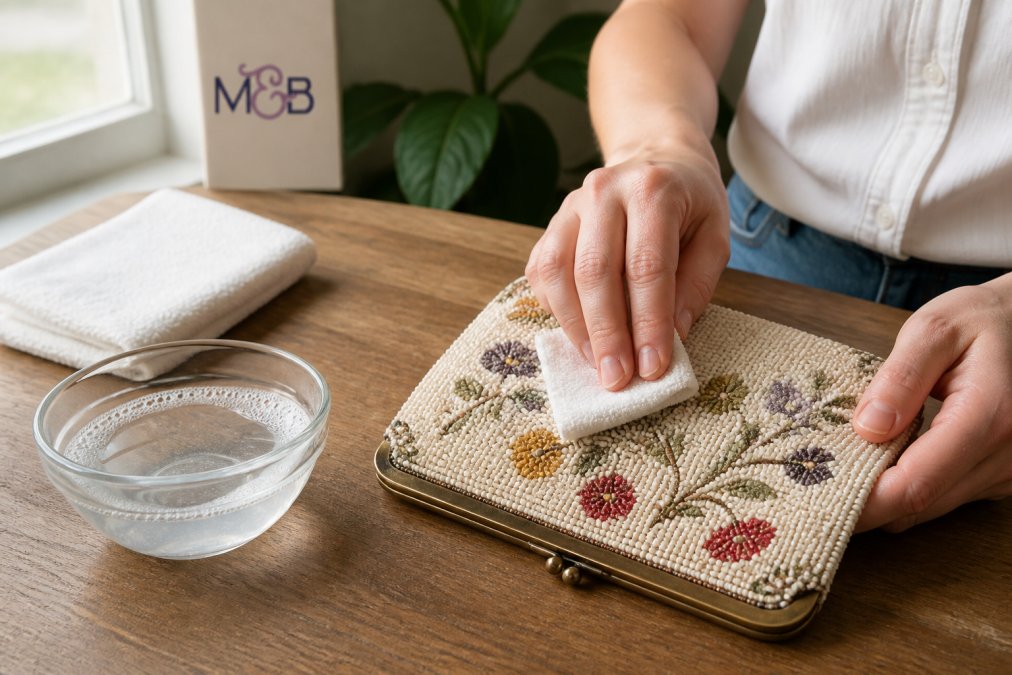
Step-by-step guide for gently cleaning vintage beaded pouches with soap and water
Spot-Cleaning Surface Debris and Dullness
Start here for everyday grime. Dampen your lint-free cloth with tepid water. Add one drop of mild detergent if the cloth alone isn't enough.
When and How to Do a Full Gentle Wash
Reserve a full wash for deep-set dirt or odor, rare, since most beaded pouches never need it.
If you do wash:
Fill a bowl with tepid water and a drop of mild detergent.
Place the pouch in a mesh bag for protection.
Submerge and use gentle agitation with your fingers.
Soak no longer than five minutes.
Rinse in clean tepid water.
Press water out with a towel. Never wring.
Air dry flat, away from sunlight.
Watch OutHot water loosens glue and weakens thread. A single hot soak can cause bead loss across an entire row. Always use tepid water.
Cleaning the Interior Lining of Beaded Pouches
The interior lining needs different care than the exterior beadwork. Most linings are delicate fabric, often cotton, and trap crumbs, lint, and makeup residue.
Beaded Bag Repair Tips for Loose Threads and Missing Beads
Loose threads and missing beads are the most common repair issues, and catching them early saves the piece, one loose bead today becomes a gap tomorrow.
Threads that stick up above the bead surface
Beads that shift or spin freely
Gaps where a bead has fallen out
Fraying near the zipper or seams
Key TakeawayThe best beaded bag repair tip is prevention: check your pouch every few months, and fix one loose thread before it becomes ten missing beads.
Best Storage Practices for Beaded Accessories
Best storage practices for beaded accessories come down to four things: protection, airflow, stable temperature, and controlled humidity. Beads are durable, glass and acrylic outlast us. The thread and lining fail slowly, unnoticed, until a row of beads drops off.
Why Climate Matters More Than You Think
A stable environment protects both. Big swings, a hot attic in summer, a cold garage in winter, stress thread more than a steady, slightly imperfect climate.
Target Conditions for Long-Term Storage
A closed closet or drawer beats a sunny shelf.
A simple hygrometer, the inexpensive gauge used for cigar humidors or houseplants, tells you whether your storage spot is in range. Most people guess wrong.
The Long-Term Storage Protocol
For a pouch you won't use for months or years:
Clean first. Never store a piece with body oils, perfume, or food residue on it, those attract pests and set into stains.
Dry completely. Any trapped moisture becomes mildew in a sealed environment.
Wrap in acid-free tissue. Ordinary tissue and newsprint are acidic and yellow fabric over time. Acid-free tissue is inexpensive and widely available.
Place in a breathable cotton or muslin dust bag. Cotton lets the piece breathe; plastic does not.
Lay flat. Hanging stretches seams and distorts beadwork under its own weight.
Add a silica gel packet, but not touching the pouch. Silica controls humidity, but direct contact can overdry silk. Put it in the corner of the storage box, not against the fabric.
Re-check every six months. Open the bag, inspect for pests or mildew, and let the piece air for an hour before resealing.
What to Avoid
Plastic bags and sealed bins. They trap moisture and off-gas fumes that can dull finishes. If you must use a bin, leave the lid cracked and add silica.
Direct sunlight and fluorescent display cases. UV damage is cumulative and irreversible.
Damp basements and bathrooms. Mildew and rust set in fast.
Hot attics and cars. Heat softens glue, warps acrylic, and accelerates silk degradation.
Hanging by the strap or chain. The weight of the beads pulls seams apart over time.
Stacking pouches directly on each other. Bead-to-bead friction dulls finishes. One pouch per dust bag.
Key TakeawayThe single highest-impact storage change most people can make is moving a beaded pouch out of a plastic bag and into a breathable cotton dust bag in a cool, dark, stable closet. That one swap prevents the two most common long-term failures: mildew and finish dulling.
Material Compatibility: What Each Bead Type Can Handle
Not all beads react the same way to water, cleaners, or the oils on your hands. This is the part most guides skip, and it's where irreversible damage happens.
Read the Finish, Not Just the Bead
Before you touch a cloth to a pouch, identify what's actually on the surface:
Aurora Borealis (AB) coating. A thin metallic film applied over glass or crystal to create that rainbow sheen. AB is the single most solvent-sensitive finish on the market. Alcohol, acetone, and even some "gentle" glass cleaners cloud it permanently, there is no fix once it dulls.
Silver- or gold-lined crystal. A metallic foil or coating sandwiched inside or behind the bead. Long soaks let water wick between the foil and the glass, causing the backing to peel or turn gray. Keep any wash under about two minutes.
Iridescent and luster finishes. A sprayed or fired-on layer that can craze (develop fine cracks) with repeated wet-dry cycling. Spot-clean only.
Dyed or color-lined seed beads. The dye can bleed into the lining or adjacent beads when wet. Test on a hidden bead first.
Bare glass, matte glass, and acrylic. The most forgiving. A brief tepid rinse with a drop of mild dish soap is fine.
Chemical Compatibility at a Glance
Finish / Bead Type
Plain Tepid Water
Mild Dish Soap
Isopropyl Alcohol
Acetone / Nail Polish Remover
Bare glass
Safe
Safe
Safe (brief)
Avoid
Matte / etched glass
Safe
Safe
Can dull
Avoid
AB-coated glass or crystal
Safe (brief)
Safe (brief)
Clouds finish
Destroys finish
Silver- or gold-lined crystal
Safe (brief)
Safe (brief)
Avoid
Avoid
Iridescent / luster finish
Safe (brief)
Safe (brief)
Avoid
Avoid
Acrylic / resin
Safe
Safe
Can craze
Dissolves
Dyed seed beads
Safe (brief)
Safe (brief)
May bleed dye
Avoid
Natural stone or shell
Safe (brief)
Safe (brief)
Varies by stone
Avoid
"Brief" here means under two minutes of contact, followed by a clean-water rinse and immediate blotting. Soaking is what causes most finish failures, not the cleaner itself.
Why Alcohol and Acetone Are the Real Enemies
Isopropyl alcohol is the go-to for electronics and eyeglasses, so people reach for it on beadwork. On an AB or iridescent finish, alcohol dissolves the thin metallic layer within seconds. Acetone is worse, it attacks acrylic beads at the polymer level, leaving a permanently etched, chalky surface. Neither damage is reversible. If a bead has a coating you can see a rainbow in, treat alcohol as off-limits.
The Hidden-Spot Test
Before any cleaner touches visible beadwork, test it on a spot no one sees:
Choose a bead near the interior seam or under the zipper flap.
Apply one drop of your cleaner with a cotton swab.
Wait 60 seconds, then blot dry.
Compare the test bead to its neighbors under natural light.
Watch OutNever use ammonia-based glass cleaner, or abrasive cream cleansers on any beaded pouch. These strip finishes and can lift glue holding the lining in place, all in a single application.
Pro TipWhen in doubt, water and a drop of mild dish soap is the safest universal default. If a stain won't lift with that, the problem is usually the lining or thread, not the bead, and that's a job for a restorer, not a stronger solvent.
Professional Restoration vs. DIY: When to Hand It Off
DIY works for spot-cleaning, light repairs, and routine storage. Professional restoration is better when damage runs deeper than the surface.
Hand it off if you see:
Large sections of missing beads
A deteriorated lining that's tearing
Broken or rusted hardware
Water stains that won't lift
A vintage piece with real value
Frequently Asked Questions
Can you wash a beaded bag in the washing machine?
No. A washing machine's agitation will crack glass or acrylic beads, fray the thread, and warp the lining of beaded pouches. Hand-wash only when a full clean is truly needed: fill a bowl with tepid water and a drop of mild detergent, dip a lint-free cloth, and dab the surface. Rinse with a clean damp cloth, blot, and air dry flat. For spot issues, skip water entirely and use a dry microfiber cloth first.
How should beaded pouches be stored to prevent damage?
Stuff the pouch lightly with acid-free tissue to hold its shape, then place it in a breathable cotton dust bag, not plastic. Store flat or upright in a cool, dry drawer away from direct sunlight and humidity swings. Keep silica gel packets nearby in damp climates to limit moisture damage. Avoid hanging by the strap, which stretches thread over time, and never stack heavy items on top of hand-stitched beadwork.
How do you fix a loose thread on a beaded accessory?
Do not pull the loose thread. Thread a fine beading needle with matching thread, knot it, and re-stitch through the existing bead holes to secure the loose section. Follow the original stitch pattern so the repair blends in. If several beads have shifted or a whole row is unstable, stop and take it to a seamstress or beadwork specialist.
What should you avoid when cleaning vintage or handmade beadwork?
Skip abrasive cleaners, bleach, ammonia, vinegar soaks, and ultrasonic jewelry cleaners, all of which dull or crack beads and weaken thread. Never submerge a beaded pouch for long soaking. Avoid hot water, harsh scrubbing, and drying with heat, since heat makes beads brittle and shrinks cotton lining. For tarnish on metal findings, use a dry soft cloth, not liquid polish, which can seep into bead holes and stain fabric.
Beaded pouches reward a little attention. The challenge is knowing which method fits each bead type and when to stop and hand off the work. Mercury & Bloom curates handcrafted pieces made to last, from the You Are Amazing Beaded Coin Purse to the Pickleball Paddles Beaded Coin Pouch. Each one is selected for quality, beauty, and everyday function. Add to cart and start your collection with a piece worth caring for.
A mahjong social game keeps adults coming back for real connection and sharper thinking. See why it beats other game nights and how easy it is to host.
Find the best functional pouches for parenting. Compare stylish, durable options designed for daily essentials, organization, and on-the-go convenience.
Discover must-have mahjong accessories for social play, from racks and scorecards to gifts for players. Build the perfect game night setup with our guide.
Learn how to verify handcrafted artisan goods with a practical checklist. Inspect materials, ask sellers key questions, and spot authentic craftsmanship.
Explore the handcrafted jewelry and accessory trends 2026 has in store, from beaded statements to personal styling tips. Your guide to artisanal elegance.
Learn how to style custom sneakers for any occasion. Get outfit ideas with jeans, dresses, and colorful kicks that make your custom pair the focal point.
Decode artisanal home decor return policies before you buy. Learn return windows, shipping damage claims, custom order rules, and how to get a full refund.
Discover unique sorority gift ideas for 2026, from handcrafted pouches to personalized accessories. Find the perfect bid day or big/little reveal gift.
Learn how to spot authentic handmade goods with 7 expert checks. Discover tool marks, material quality, and more to shop with confidence. Start exploring.
Handcrafted goods worth: Discover why handcrafted goods cost more and deliver real value. Learn quality markers, sustainability impact, and cost-per-use.