Your cart is empty
Tax included and shipping calculated at checkout

Drawer menu
Tax included and shipping calculated at checkout

Last Updated: October 2, 2026
A wardrobe statement piece is a single accessory or garment that carries an outfit, drawing the eye before anything else does. It does not have to be loud, only deliberate. A hand-stamped cuff, a beaded coin purse, or custom sneakers all do the job when the rest of the look stays quiet.

At Mercury & Bloom, we curate handmade statement pieces with one test in mind: does this piece make the wearer feel more like herself? That question matters more than trend cycles.
Below, we explain why handmade goods cost more, and show you how to style and care for them.
The fastest way to transform an outfit is to change one element and leave everything else alone. Swap a plain wallet for a beaded coin purse and a basic jeans-and-tee combination suddenly has a focal point.

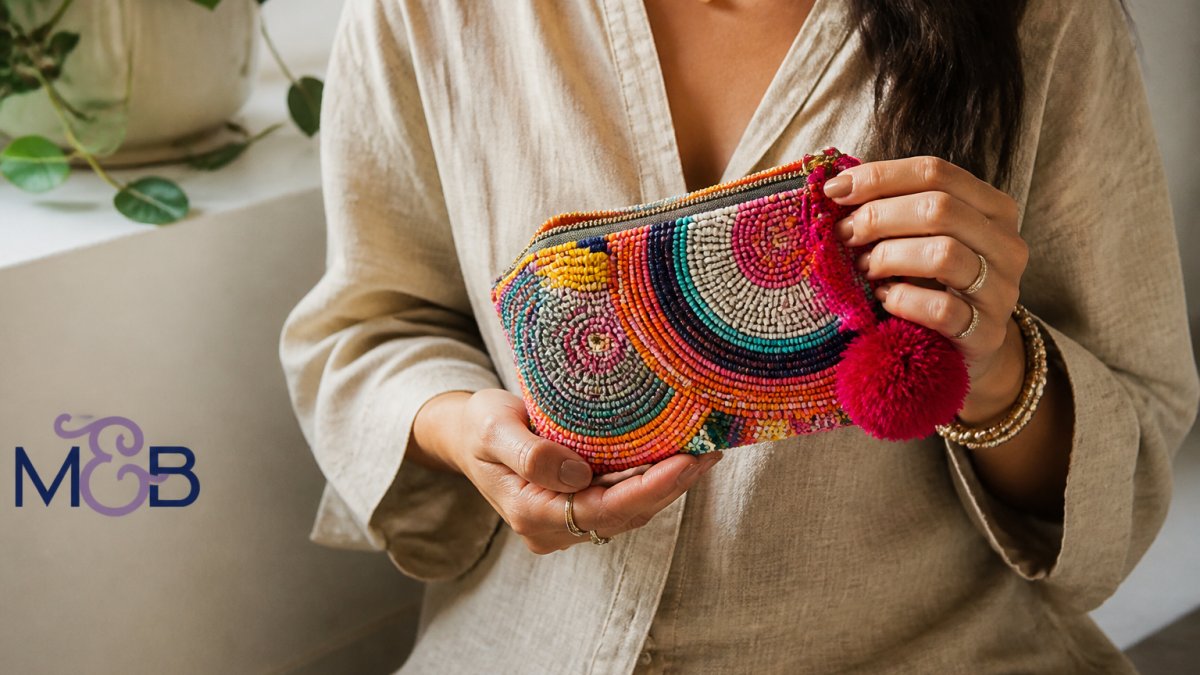
Beaded coin purses are the most underrated statement accessory in a wardrobe: small enough to disappear into a tote, bright enough to carry a look when you pull one out at dinner.
The You Are Amazing Beaded Coin Purse (5.5 by 4.5 inches, $17) pairs 100% cotton construction with a playful pom-pom zipper and a positive message. For something bolder, the Pickleball Queen Beaded Coin Purse ($48.40) is double-sided and fully beaded, so it reads as a small piece of wearable art rather than a utility item.
Sport-themed pouches let you carry a passion without wearing a logo-covered jersey. The Kiss My Ace Beaded Coin Purse ($20) uses a single-sided tennis ball graphic and 100% cotton construction, handcrafted in India. The “Let’s Partee” Golf Beaded Coin Purse ($27) holds cash, cards, coins, and a few tees.

For pickleball players, the Pickleball Paddles Beaded Coin Pouch ($15) is shaped like a paddle, while the Pickleballer Checkered Beaded Zipper Coin Purse ($23.90) uses seed bead embroidery across a 5 by 3.5 inch frame. Both work as a coin pouch, card holder, or mini makeup bag.
| Piece | Price | Size | Best For |
|---|---|---|---|
| You Are Amazing Beaded Coin Purse | $17.00 | 5.5" x 4.5" | Everyday positivity, gifting |
| Pickleball Queen Beaded Coin Purse | $48.40 | 5.5" x 4.5" | Court-side statement styling |
| Let's Partee Golf Beaded Coin Purse | $27.00 | Compact | Golf bags, tournament gifts |
| Pickleball Paddles Beaded Coin Pouch | $15.00 | Compact | Budget-friendly sport gift |
| Pickleballer Checkered Zipper Coin Purse | $23.90 | 5" x 3.5" | Card holder, mini makeup bag |
| Evil Eye Fully Beaded Coin Purse | $15.00 | Compact | Symbolic everyday carry |
| Kiss My Ace Tennis Ball Beaded Coin Pouch | $20.00 | 5.5" x 4.5" | Tennis lovers, cheeky gifting |
Handmade goods cost more because a person, not a machine, made them. Beadwork is placed one bead at a time and embroidery is stitched by hand. Small-batch production cannot spread labor costs across thousands of identical units, so each price reflects the hours behind it.
When you see a beaded coin purse priced at a fraction of what handmade work should cost, something in the chain is being compressed: wages, materials, or both.
This is why we vet the makers behind every piece: real craftspeople, not resellers relabeling mass-produced goods. It is the difference between supporting an artisan and paying a middleman.
The rule for styling statement jewelry is simple: one bold piece per outfit, and let everything else stay quiet. A beaded coin purse with a patterned dress fights for attention; the same purse with a plain linen shirt and denim becomes the entire look.
Necklines set the frame. Where the eye lands first determines whether a statement piece reads as intentional or accidental.
A few guidelines we use when styling accessories:
For gifts, pick a theme tied to the recipient's hobby, like pickleball, tennis, or golf. If you are unsure of their palette, a neutral base with one accent color works with almost any wardrobe.
Handcrafted accessories last longer when you treat them like the small works of art they are. Beadwork is durable but not indestructible, and the two things that shorten its life fastest are water and abrasion.
Here is the routine we recommend:
Sustainable wardrobe choices start with buying fewer, better accessories. A handmade piece that lasts years replaces a rotating stack of cheap items that fall apart in a season, and artisan-made goods are inherently lower-waste because they are produced in small batches, not manufactured to sit in a warehouse.
Sustainability in fashion is not only about fabric. It is about how many times you actually wear a piece and how long it survives. A $15 beaded pouch you carry for five years has a far lower footprint than five $5 pouches you replace annually.
"Ethically made" is a phrase almost every brand uses and almost none define. The useful move is to ask specific questions and see whether the maker answers plainly. Genuinely small-batch makers can name their suppliers, their workshop, and the person who does the beadwork; a reseller relabeling mass-produced goods usually cannot.
Questions worth asking before you buy:
Mass production optimizes for volume. Small-batch production optimizes for fit between what is made and what is wanted. The difference shows up in three places:
When you buy from craftspeople, you also keep traditional skills alive. Beadwork and hand embroidery are passed-down techniques, and every order supports the artisan who practices them, which is why we build our collection around makers rather than mass production.
Building a wardrobe with intention means choosing fewer pieces and choosing them well. The accessories you reach for every day shape how you feel getting dressed, and handmade statement pieces for wardrobes do that better than anything mass-produced.
Mercury & Bloom curates handcrafted accessories with exactly that in mind: pieces priced to reflect real craftsmanship, and designed to celebrate your individuality.
Handmade goods cost more because each piece is made individually by an artisan, not on an assembly line. A single beaded coin purse can take hours of hand-stitching, bead placement, and finishing. Mass-produced accessories spread that labor across thousands of identical units. When you buy handmade statement pieces, you pay for the craftsperson's time, skill, and materials, not just the finished object.
Pick one focal point and let everything else stay quiet. If you wear a beaded coin purse with bold colors, keep your clothing neutral: a white tee, denim, or a simple linen dress. That way your handmade statement piece reads as intentional, not chaotic.
A statement piece draws the eye first. It can be a beaded coin purse, an oversized signet ring, or a hand-stamped pendant. What matters is that it carries visual weight and personal meaning. In a modern wardrobe, statement pieces often serve double duty: they look distinctive and they hold everyday essentials. That combination of form and function is what separates a true statement piece from a decorative afterthought.
Handmade goods support slower fashion cycles. When you buy artisan-made accessories, you avoid the overproduction that fills landfills with unsold inventory. Many artisans also work with natural materials like cotton and seed beads, and they produce in small batches. Choosing handmade statement pieces means you buy fewer items, keep them longer, and support craftspeople directly.
Spot clean only with a damp cloth for beaded pieces, since soaking can loosen threads or dull bead finishes. Store pouches in a soft dust bag away from direct sunlight. Avoid tossing them loose in a bag with keys or sharp objects.


